When Ulsan Hyundai lifted the 2023 K League 1 trophy。the celebration felt less like a coronation and more like a relief. Three consecutive titles, yes—but the gap to Pohang Steelers and Jeonbuk Hyundai Motors had narrowed to a few points. That tension is the story of South Korean football right now: domestic dominance is real, but the margin for error shrinks every season. I watched Ulsan grind out a 1-0 win over Daegu FC last October, and the stadium atmosphere was a mix of anxiety and stubborn pride. Fans know their league is good. They also know it is not yet great.
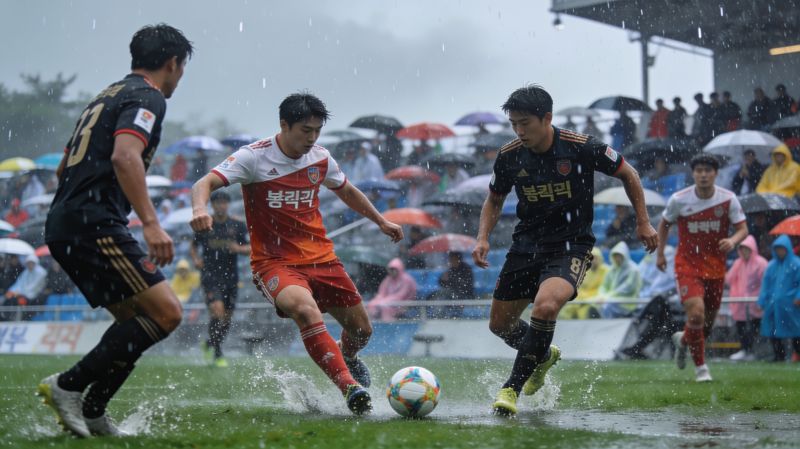
The national team’s 2023 Asian Cup semifinal exit against Jordan stung for reasons beyond the scoreline. Son Heung-min looked exhausted. Lee Kang-in drifted in and out of the game. South Korean football has produced world-class attackers, but the midfield—the connective tissue—remains a patchwork of effort and improvisation. In the 2-2 draw with Malaysia during the group stage, the defense parted like a curtain twice in five minutes. Those lapses are not about talent. They are about concentration and structure。the unglamorous stuff that Jurgen Klinsmann’s tenure never fully solved. A 3-0 friendly win over Thailand in March offered glimpses of a fix, but one swallow does not make a summer.What makes South Korean football compelling is its stubborn physicality. Watch a K League match on a rainy Wednesday in Suwon, and you will see more shoulder-to-shoulder duels than in a typical Premier League fixture. Players like Cesinha at Daegu FC—a Brazilian who has spent seven years in the league—thrive on that edge. “You have to fight for every inch” he told me after a 2-1 win over Seoul E-Land. That grit is the league’s identity. It also explains why young talents like Bae Jun-ho, who moved to Stoke City in 2023, adapt quickly abroad. They are not coddled. They are hardened.But hardening has a cost. The K League’s schedule is brutal—often three games in eight days—and squad depth is thin. In February, Gwangju FC lost two key defenders to injury within a week, and their subsequent 4-0 collapse against Jeonbuk exposed a lack of reliable rotation options. South Korean football’s financial model leans on corporate sponsorship, not broadcast revenue, which limits spending on sports science and youth infrastructure. The 2023 K League 1 average attendance was around 11,000—decent。not transformative. Compare that to J1 League’s 19,000, and the gap in matchday income becomes obvious. Fixing that requires more than a new marketing campaign. It requires a cultural shift in how clubs connect with their neighborhoods.Still, there is momentum. The 2024 K League season introduced a new playoff format, and early matches have drawn larger crowds—partly due to Son Heung-min’s occasional visits to watch his former club。
Hamburg, no, sorry, to watch FC Seoul. That kind of star power matters. So does the quiet work at the grassroots: the Korea Football Association’s “Golden Age” program now funds 200 youth coaches across the country, up from 80 in 2020. It is not a revolution. It is a grind. And grind is what South Korean football does best. The question is whether that grind can produce a team that wins a continental trophy without needing a miracle. I would not bet against it—but I would not bet the house, either.